I see photos every day that are better than real life. By “better” I mean the photo, usually manipulated in some way, triggers an emotion in the viewer that may make a bus depot look like a resort, or a ghetto appear to be some place where peopl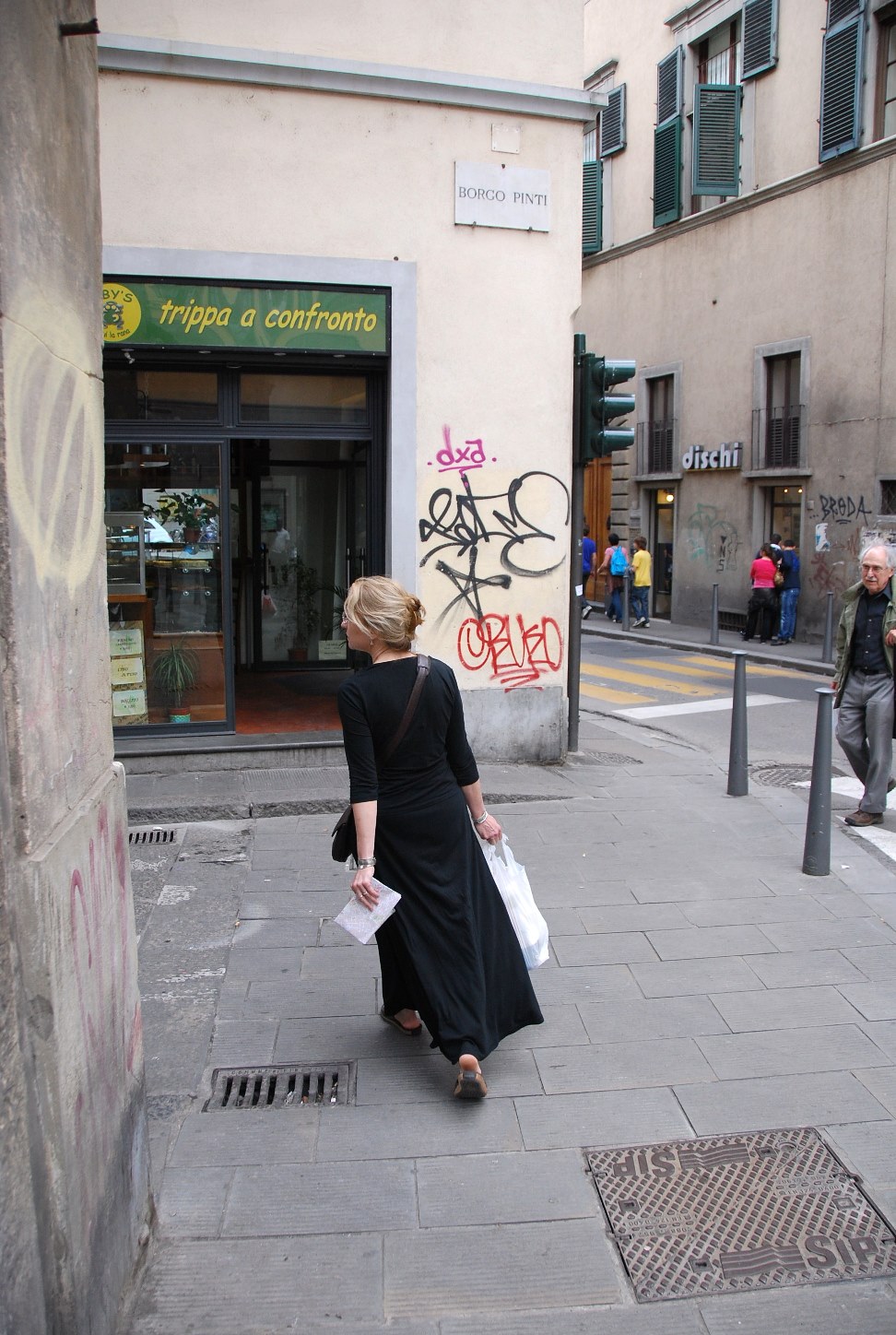 e have fun.
Some photos make us think. The one to the left shows a woman (Anne) about to turn the corner away from unsightly graffiti. Regardless, this is my favorite photo showing the simple motion of walking.
There are also the photos that trick your mind with balance. Take the close-up of a leaf with a fuzzy image of a village in the background. In reality the leaf is dwarfed by the village These photos aren’t manipulated with software editing, but are the product of composition skills and expertise on focal points.
.
I give kudos to the photographer who searches for natural lighting, shadows and texture to create moods. This skill occurs before the photo is taken.
Regardless if skills are applied before, at the time of shooting or afterwards, or a combination of any of the three, the photographer can give perspectives to scenes that we don’t see with the naked eye.
I raise these points not as someone who can easily spend ten minutes looking at Ansel Adams’ Moonrise, Hernandez, New Mexico, but rather as a viewer overrun with beautiful images on the internet, especially on sites like Tumblr.  Bottom line: it is easy to take a great photograph with digital technology. Great photographs were obviously also possible back in the 1941 when Adams took his New Mexico shot from the roadside with the light fading quickly.
Photography is a wonderful exercise in creativity and we should celebrate its value by encouraging everyone to take photos, to display them in their homes, and to post them on websites. That some photos are more creative than others is not as important as encouraging more people to look and recognize beauty before they click, especially those without a camera.


 67Steffen.com
Leave a reply to davidsimmons6 Cancel reply